A B2B2C SaaS CMS platform, or in English – an online tool that enables professional content creators to build their own interactive experiences and engage with their audiences.
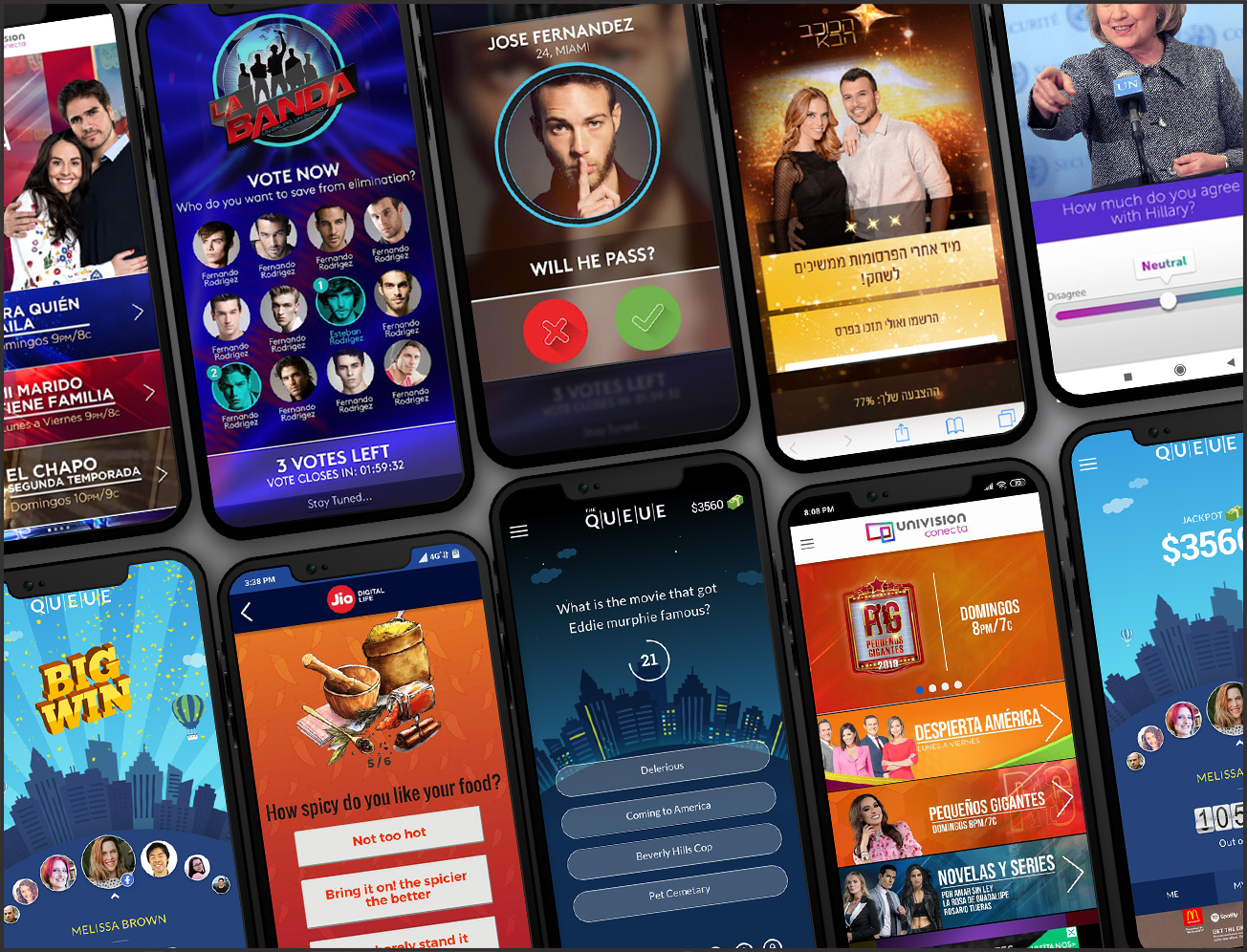
Screenz Platform was implemented by high profile clients such as Sony, ABC, FOX, Jio and Univision, and engaged millions of end users. This was Screenz’s flag product before Screenz Live.
Studio
Screenz
Clients
Sony,
ABC,
Fox
Jio,
Univision
My Roles
Lead UX
Started as UX expert, and ended up in charge of the entire product process, though always remaining the final authority on UX research, flows, specs, wireframes and user testing.
Product Manager
Transforming business needs to KPIs & feature goals, planning and supervising the production process, and in charge of analytics hooks and big data reports.
Graphic Team Lead
Directed Screenz’s graphic design, overseeing a team of 3 designers, working on different products, branding, designing UI, marketing materials and presentations.
I designed the UX for various activities: quizzes, polls, live votes, articles, chat, mini-games and any other engaging activity that can promote a brand.
I maintained the CMS platform, which supports fully customizable content and graphics, with live dashboards and reports.
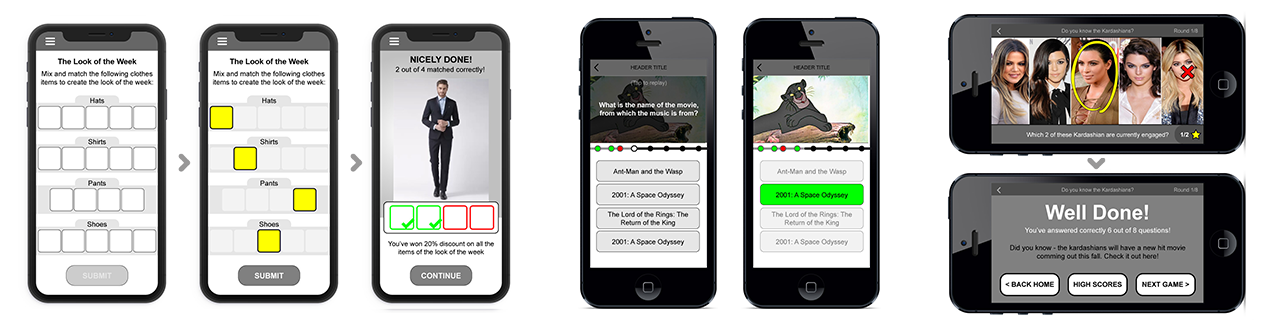
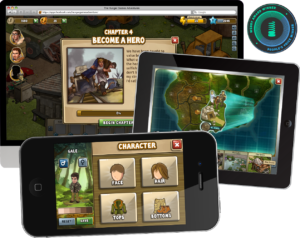
The CMS enabled content creators, including Screenz itself, to create engaging activities for their end users. Some of which I’ve designed myself:
Focus on
Platform Overhaul
The platform was starting to be too robust: the code was too spaghetti, the UX too messy, and maintenance too costly. So Screenz decided to remake its flag product from scratch, better and leaner.
I was put in charge of planning and designing this new platform, and it was a fun challenge.
First, we needed to understand the Pains of the old CMS, and the Needs of the new one.
We’ve ended up with a list of requirements:
Easy and intuitive to use
Easy to publish and monitor live events and activities
Simpler activities, with fewer editing capabilities
Have a preview of the activity while you create it
Easier for us to maintain
I’ve researched other content creation platforms, from Wix to Google Forms, and started imagining our new platform.
2
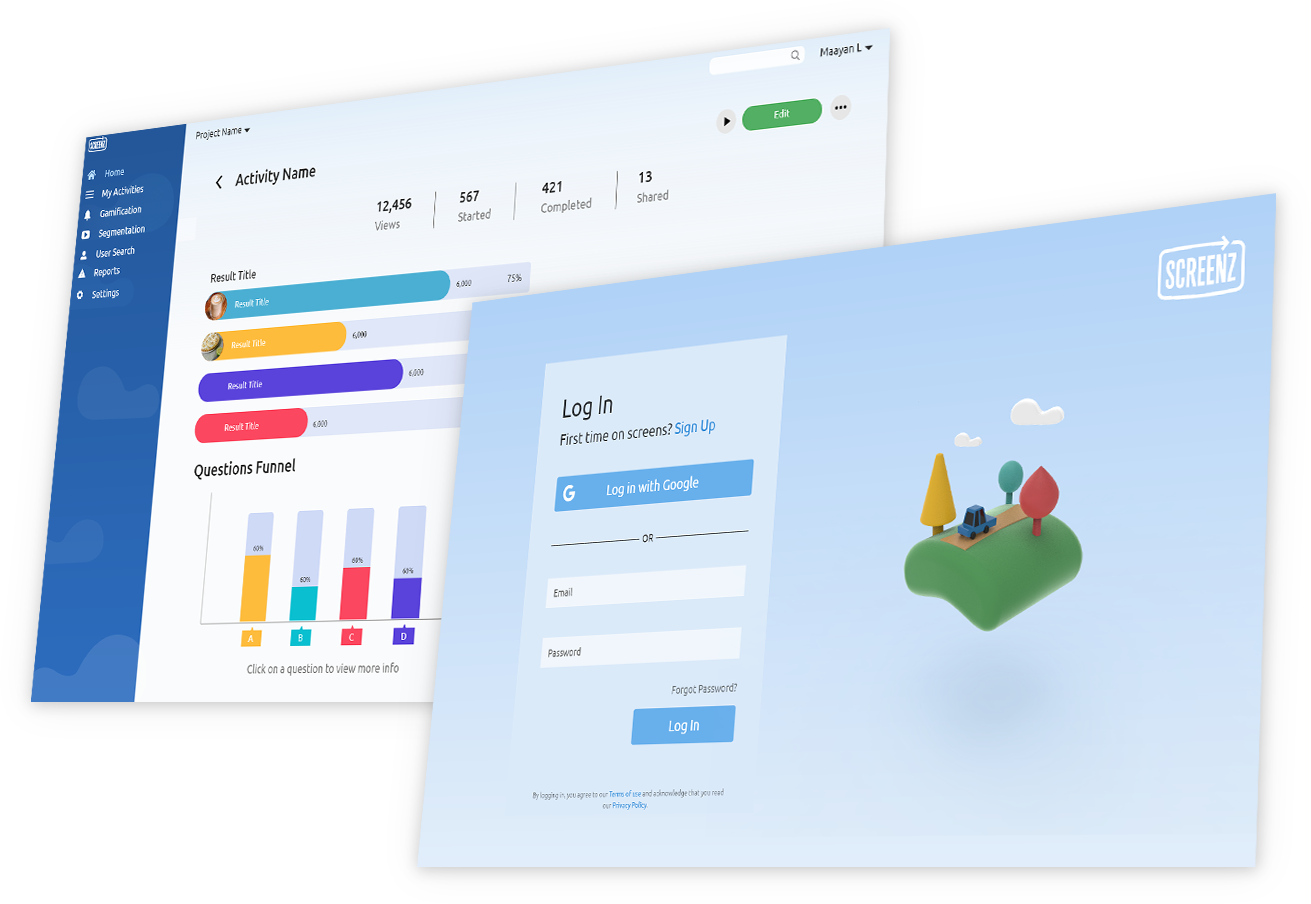
General Platform Design
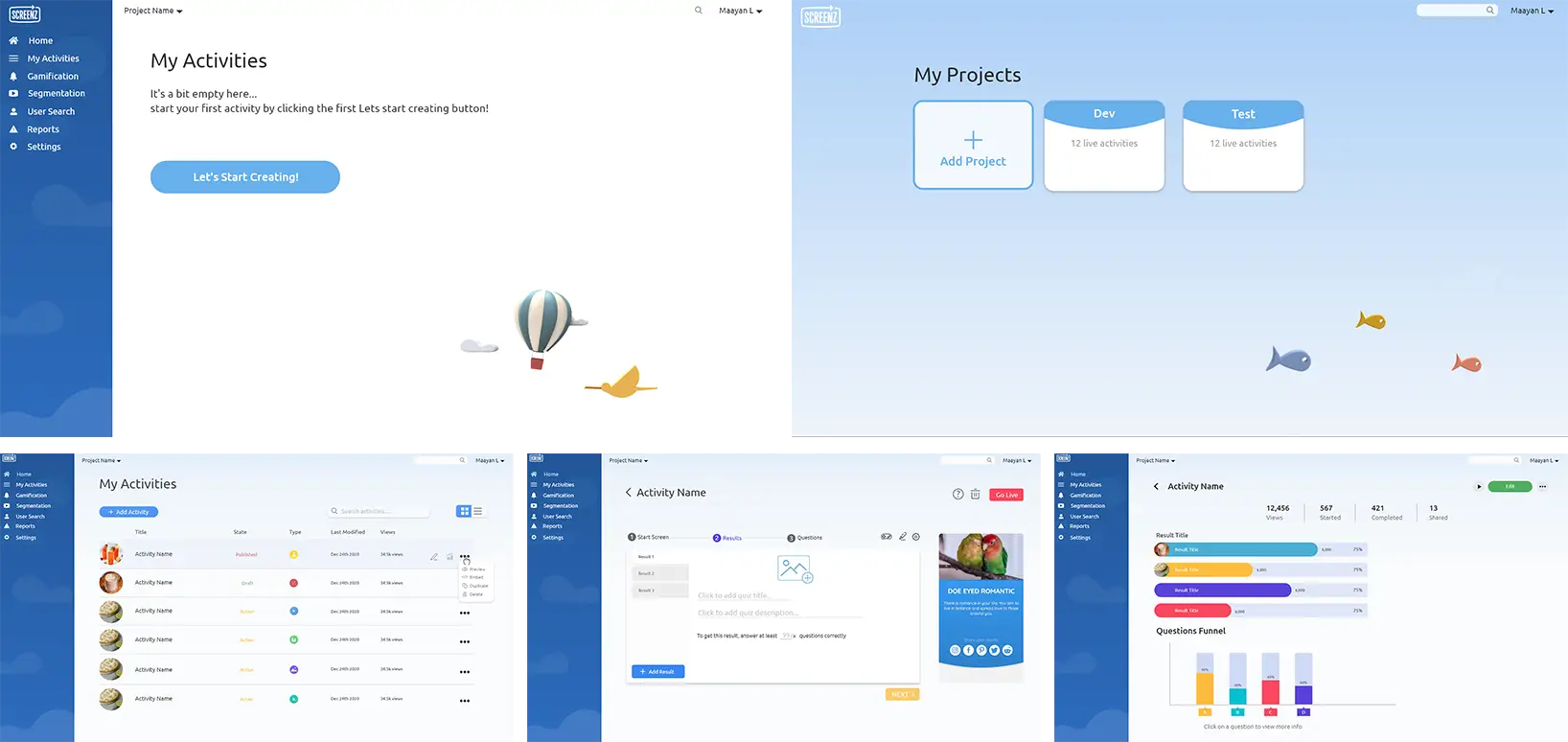
I’ve started with the general structure and architecture of the new platform. Thanks to years of experience both using and maintaining a CMS, I’ve quickly established its main UX principles.
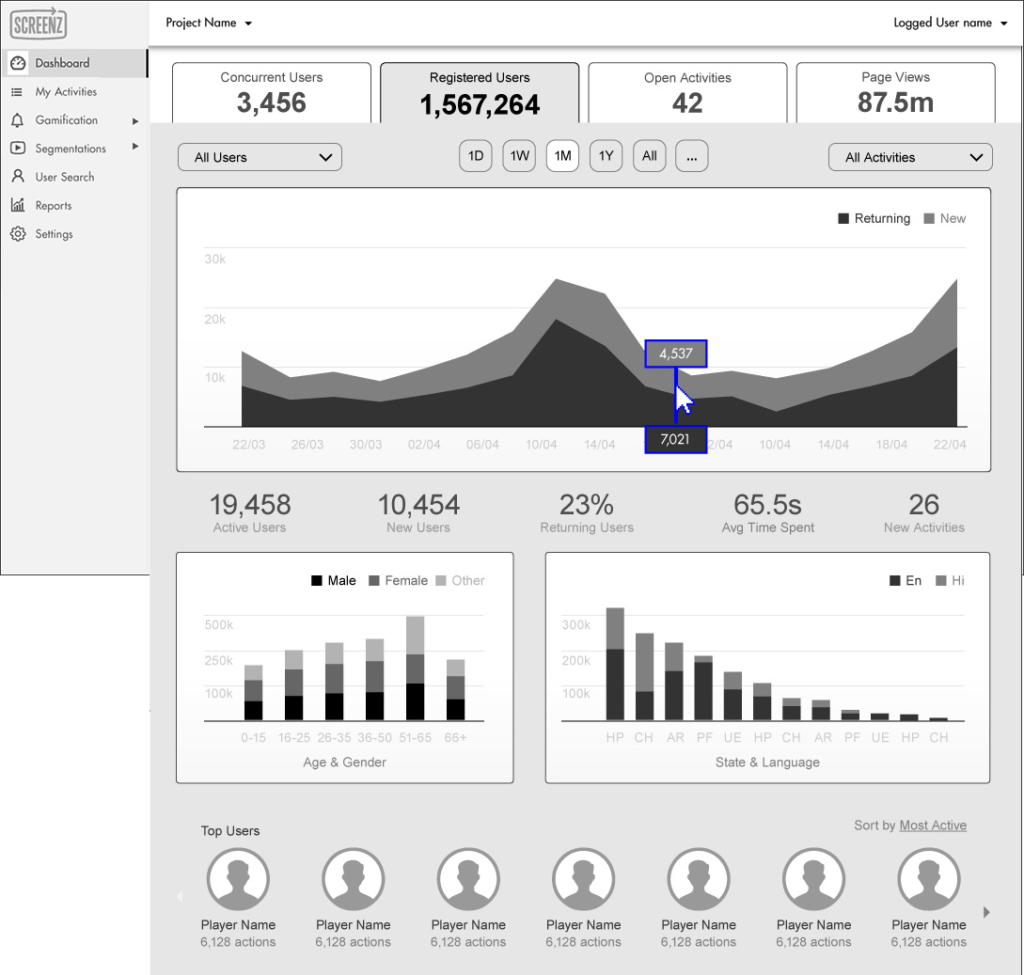
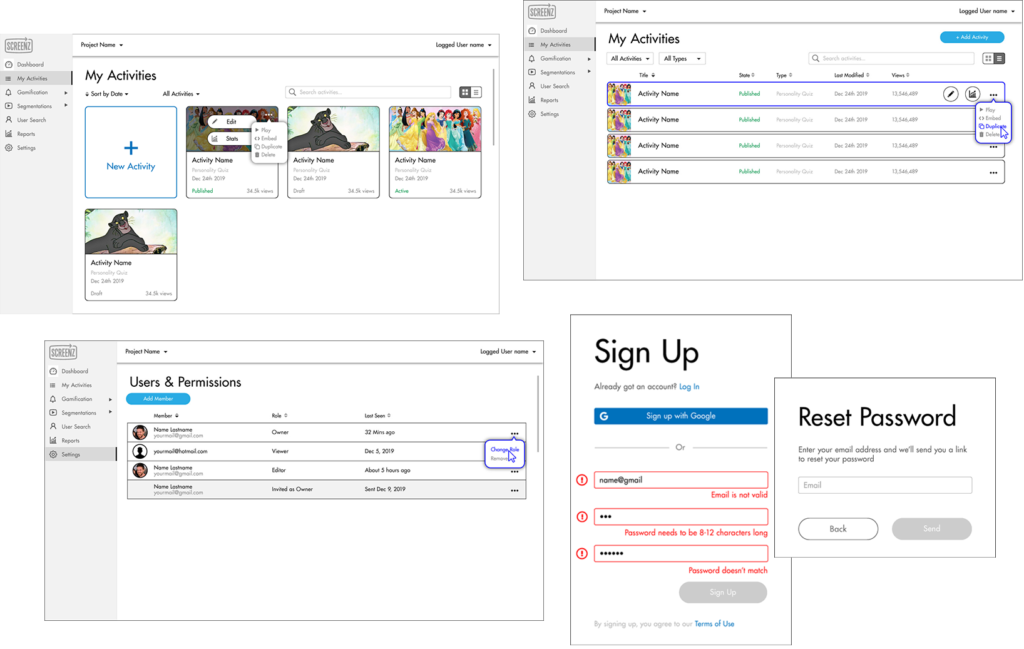
Menu navigation, login flows, activities gallery/list, dashboards, reports generator, users & permissions, multiple projects, audience search and segmentations.
3
Simpler Activities
The old activities had too much customizability – it was too easy to make them ugly or even unusable, unless you hired costly professionals to polish your content.
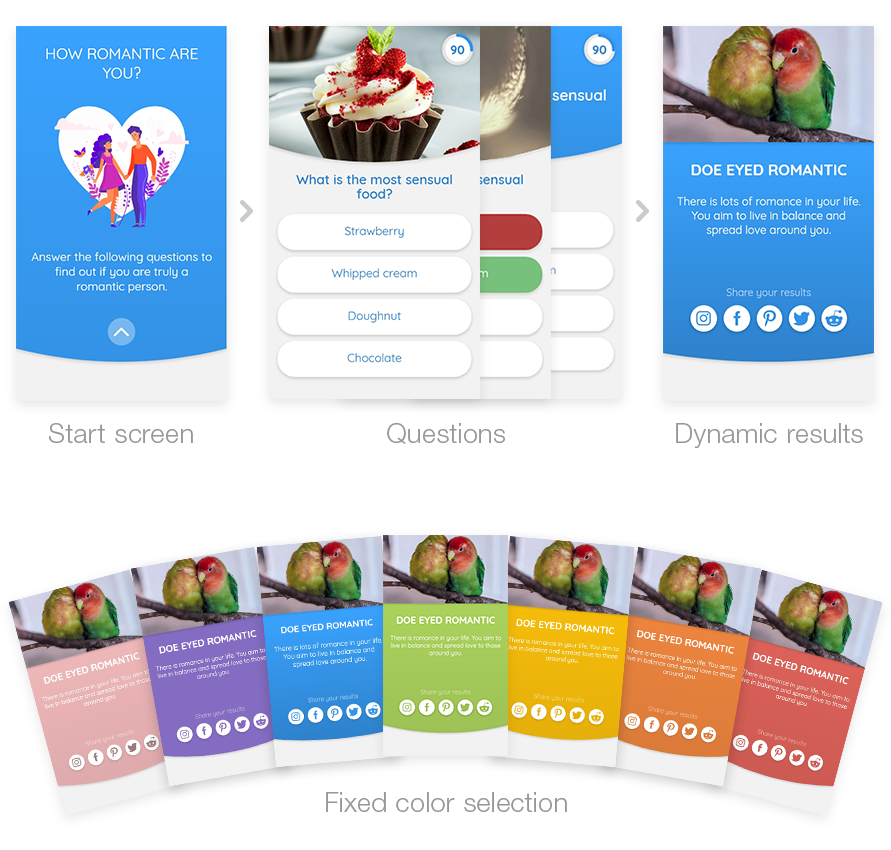
We’ve decided to make it much simpler. All the UI elements, fonts, layout and icons are fixed. The clients can only choose a color, and insert their content. This way, the activity will always look polished, with minimum effort.
Later on, we planned to add different skins and also offer a fully customizable design for additional cost. We’ve completed our initial design that we’ve planned for the MVP.
4
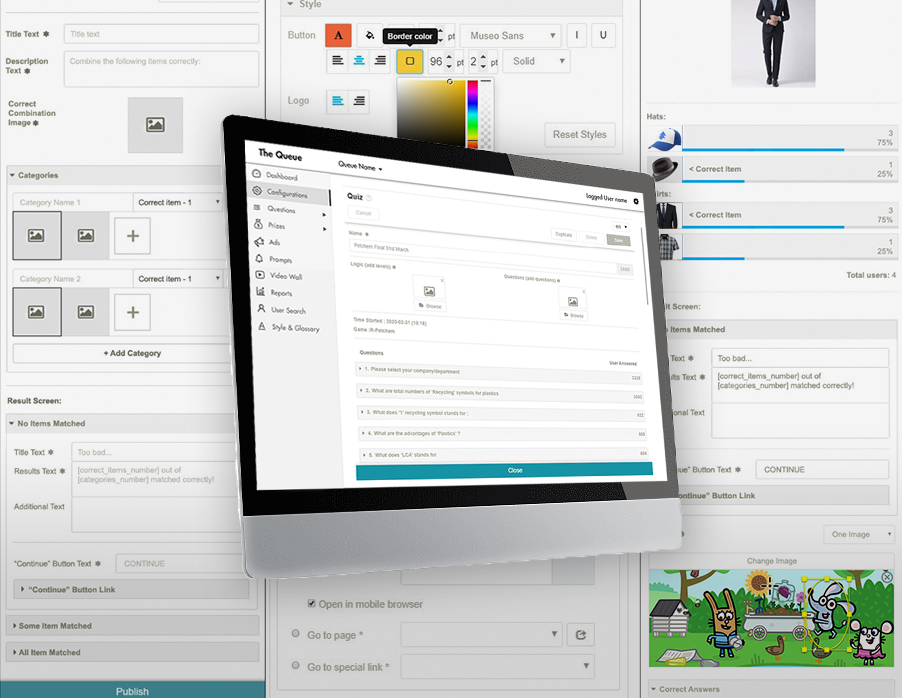
Activity Creation UX
Now that we knew how an activity looks, we could make the tool that creates it – the core component of the CMS.
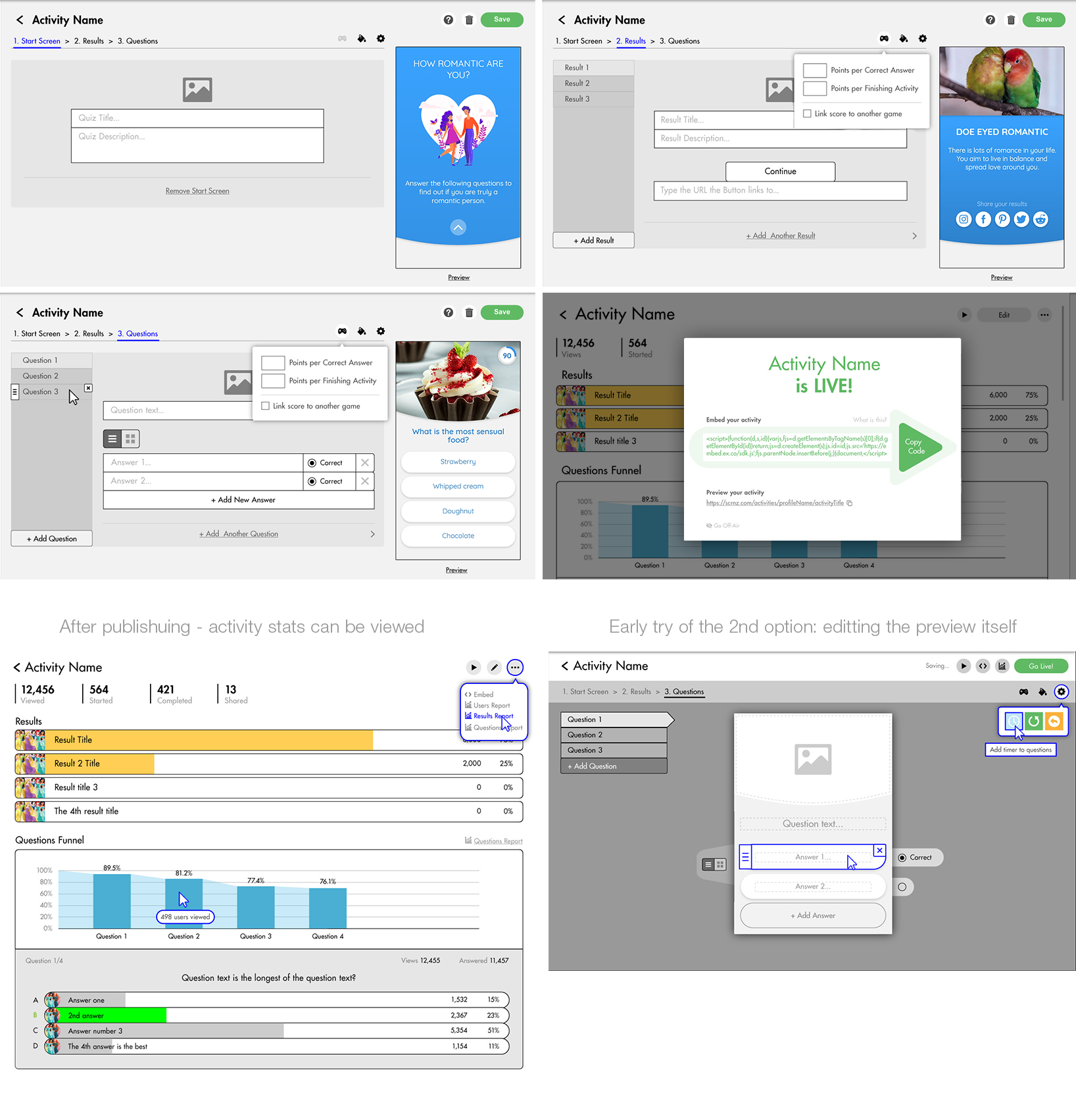
It’s basically a wizard, that goes through the creation process and ends with publishing the activity. The UX must be very clear and structured, directing the creator where to click next.
There are two approaches to handle this type of content creation tool:
Edit a form, with a preview of the end result (most quiz creation tools are using this approach).
Edit the actual end-result, as it appears to the end-user (similar to how Wix is doing it).
We’ve decided to go with the 1st option, since it was easier to implement and to direct the user through a structured wizard.
5
Graphic Design
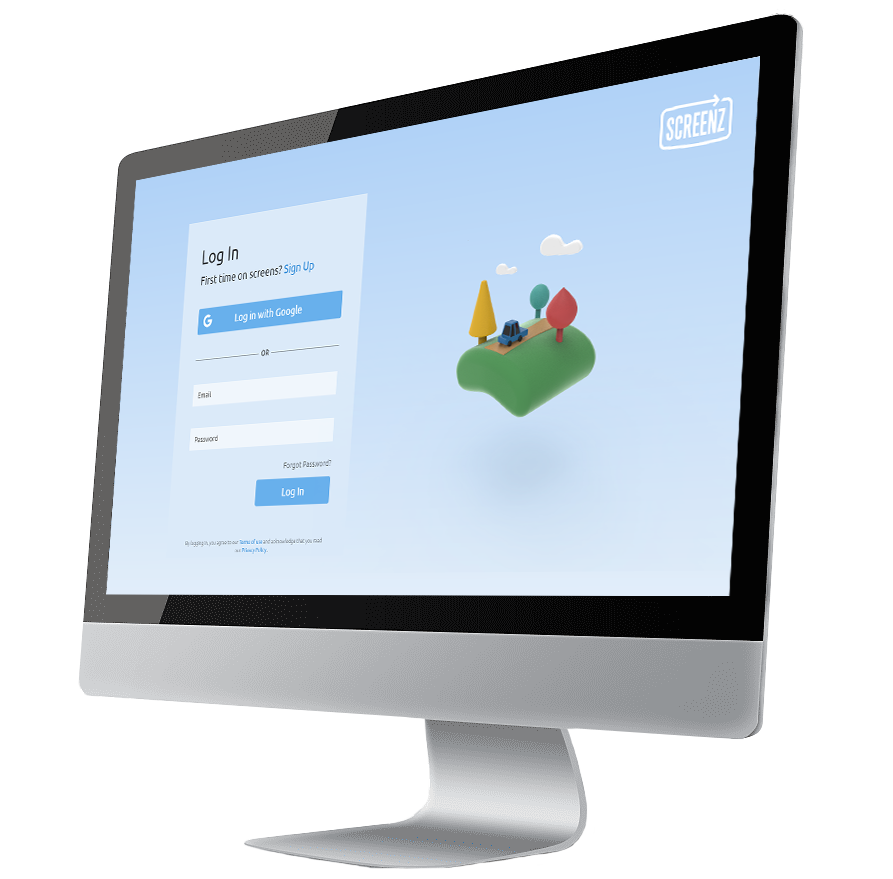
I wanted it to be light and playful, to encourage creativity, and to compliment the new activity design. We chose a sky-blue color with a feel like floating on air, and added playful 3D illustrations that combine a nature scene with one man-made element.
Unfortunately, the Covid pandemic stopped the project and we never completed its graphic design. Instead, Screenz pivoted to a new direction, creating Screenz Live.